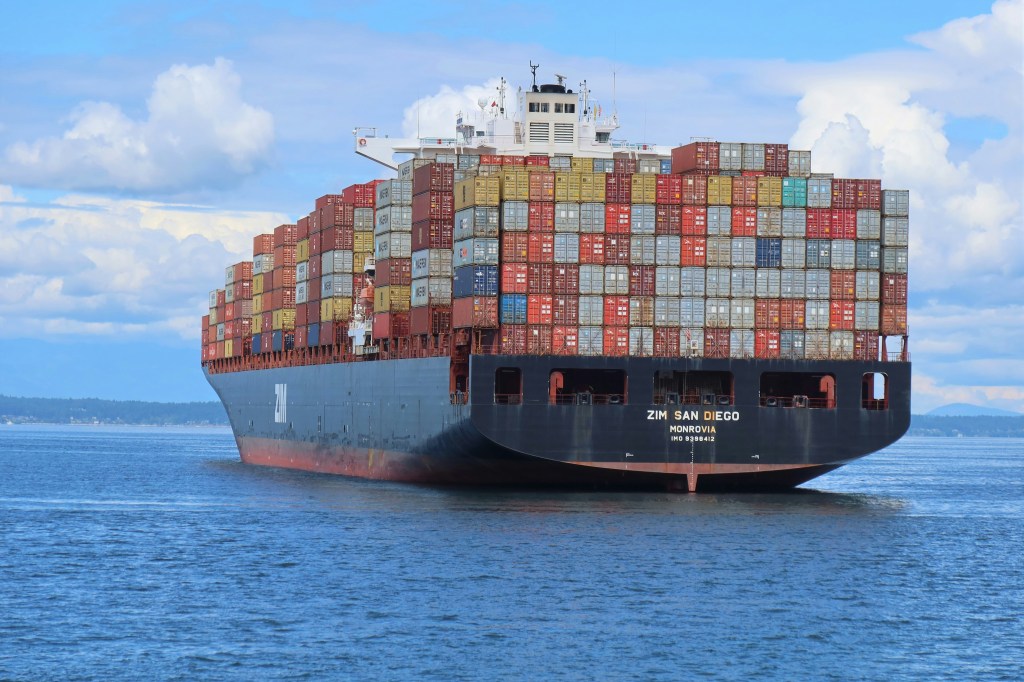
The global shipbuilding industry is dominated by three Asian nations—Japan, China, and South Korea—a phenomenon that is the result of a strategic, decades-long shift away from Western leadership. How this dominance came to be?
For a start, it has very, if not anything to do with low Labor cost and a lot more to do with low margins and stretegic choices.
The reasons behind the decline of once-powerful shipbuilding nations in Europe and North America has less to do with costs and competitive advantages , and more on Western companies have adapted by focusing on high-value, niche products within the industry.
The End of Western Supremacy: From Pioneers to Niche Players
The history of shipbuilding is a reflection of global economic power shifts. For centuries, seafaring nations in Europe were at the forefront of naval architecture and construction. This dominance reached its peak in the 19th century with the United Kingdom as the undisputed leader, thanks to its extensive colonial empire and the Industrial Revolution. The UK’s shipyards were a testament to its industrial might, churning out vessels that facilitated global trade and cemented its naval superiority. However, following World War I, the United States began to emerge as a significant competitor.
The true moment of Western shipbuilding’s zenith came during World War II, a period of unprecedented mobilization. The United States, in particular, became an industrial behemoth, building ships at a pace and scale previously unimaginable. This was driven by the urgent need to transport troops and supplies across the Atlantic and Pacific oceans. The iconic Liberty ships became a symbol of this industrial prowess, built through an assembly-line method that revolutionized construction. Shipyards like the Kaiser Shipyards became legendary for their ability to construct a new vessel in a matter of weeks, sometimes even days. At its height, the U.S. was building more ships than all other countries combined.
However, this wartime success also sowed the seeds of the industry’s eventual decline in the West. The end of the war left the U.S. with a massive surplus of ships, thousands of vessels ready to sail and available at a fraction of the cost of building a new one. This created a profound market imbalance. With a lack of new orders, many of the sprawling American shipyards were forced to close. The domestic market was also hampered by a piece of legislation known as the Jones Act of 1920. This law mandated that all goods shipped between U.S. ports must be transported on ships that were built, owned, and operated by American citizens. While intended to protect the domestic shipbuilding industry and ensure a ready supply of vessels for the Navy in times of crisis, its long-term effect was to make American shipyards uncompetitive on the global stage. Without the need to compete for international contracts, they lacked the pressure to innovate, reduce costs, or increase efficiency. They were assured of a customer base for domestic trade, but that domestic market was not large enough to sustain them as global players.
Meanwhile, Europe, particularly countries like Germany and Italy, began to pivot. Instead of competing on the high-volume, low-margin business of building cargo ships, they started to specialize. They focused on creating more complex and technically advanced vessels, such as cruise liners, naval ships, and superyachts, where the cost of production was secondary to the quality of craftsmanship and engineering. This strategic shift allowed European yards to maintain a presence in the industry, but they were no longer a factor in the mass production of container ships and tankers.
The Asian Ascendancy: A New World Order
The power vacuum left by the declining Western shipbuilding industry was filled by Asian nations. The foundation for this rise was laid in post-war Japan. The U.S. occupation after World War II was not just about demilitarization; it was also a strategic effort to rebuild Japan as a bulwark against the spread of communism in Asia. The U.S. encouraged the Japanese government to reconstruct its industrial base, including its shipbuilding capacity. This initiative gained further momentum during the Korean War, when Japan’s shipyards were a vital resource for the United Nations forces for repairs and maintenance, providing a crucial influx of business and capital.
But the real genius of Japan’s strategy was not just in its manufacturing capability but in its financial innovation. As Japan’s export-driven economy flourished, it accumulated large reserves of foreign currency, particularly U.S. dollars. The government wisely leveraged this economic strength to support its shipbuilding industry. They established the Export-Import Bank of Japan, which offered incredibly attractive financial packages to international buyers. Previously, a ship was a multi-million dollar asset that buyers had to pay for in full, a significant financial burden. Japan changed the game by offering a financial model that is now standard in the industry: low-interest loans and refund guarantees. This allowed buyers to finance the purchase of a ship with less money down, making a new vessel a more accessible investment. Other countries’ banks were unwilling to take on the risk of such massive loans, but the Japanese government, with its deep coffers, was able to back its shipyards, effectively subsidizing their growth and allowing them to undercut international competition. This blueprint was not lost on Japan’s neighbors. South Korea and China followed suit, replicating and refining this model. The three nations shared a set of key characteristics that made their dominance inevitable:
Access to the Ocean: All three nations are coastal, with deep-water ports suitable for large-scale shipbuilding.
Stable Governments: Their governments could make long-term, strategic decisions to support their industries and provide the necessary political stability for massive infrastructure projects.
Export-Driven Economies: Their economies were built on exporting goods, which meant they had the foreign currency reserves to support their shipbuilding and the internal demand to justify its scale.
Industrial Capacity: They possessed the heavy industrial base, including steel production and a skilled labor force, necessary to build ships efficiently.
The combination of strategic government support, a favorable financial model, and the right economic conditions allowed these three nations to corner the market on large, commodity-grade vessels like mega-container ships and oil tankers. They could build them faster, cheaper, and with more favorable financing than any of their international rivals.
Adapting to a New Reality: The Rise of the Component Specialists
With the mass-production market now firmly in the hands of Asian shipyards, Western nations had to find a new way to compete they did so by embracing a different business model: specializing in high-value components. It’s a classic example of moving up the value chain.
For example Germany, a country that once had a major shipbuilding industry. Instead of building the entire vessel, German companies now focus on manufacturing critical, high-margin components. The best example is the marine engine. The engine of a mega-freighter can cost up to $50 million, representing nearly a quarter of the total cost of the ship. Another example is MMG, a German company that makes propellers. These propellers are so large they require specialized facilities to cast and refine them, and a single propeller can sell for over €3 million. The profit margins on these specialized components are significantly higher than the razor-thin margins that shipyards operate on.
This “Michelin-star restaurant” approach contrasts sharply with the “McDonald’s” model of Asian shipyards. While the Asian companies are focused on volume and efficiency, the Western companies are focused on quality, technical expertise, and high-margin products. The U.S., for instance, builds incredibly complex and expensive aircraft carriers and submarines, which are naval assets that no other country can produce on the same level. A single Gerald R. Ford-class aircraft carrier can be worth as much as the world’s largest container ships combined, a stark illustration of the difference in strategic focus.
In conclusion, the current state of the global shipbuilding industry is a result of strategic choices rather than a failure of one region over another. Japan, China, and South Korea made the deliberate decision to dominate the high-volume, low-margin mass production market for commercial vessels. The U.S. and Europe, on the other hand, have chosen to specialize in the high-value, high-margin areas of naval shipbuilding and critical components. This division of labor has created a global ecosystem where each region plays to its strengths. The Asian nations build the bodies of the ships, while Western nations provide the high-tech, expensive, and specialized hearts and brains that power them.
The bigger question is how, in the new world tariffs and trade wars, can this set up survive.
With geopolitical tensions, and with the renwed protectionist mood in the USA which is geopardizing the global supply chains that underpin shipbuilding, it is far from obvious how the market will play out in the next few decades. And in the case especially of Europe, the future might hold some very difficult years as the lack of shipping capacity and the increased broken down supply chain might put in a weak strategic position compared to the rest of the world. Easy solutions are in short supply, as rebuilding the capacity might take years if possible at all. That has likely already sailed.







 Chainergy
Leave a comment