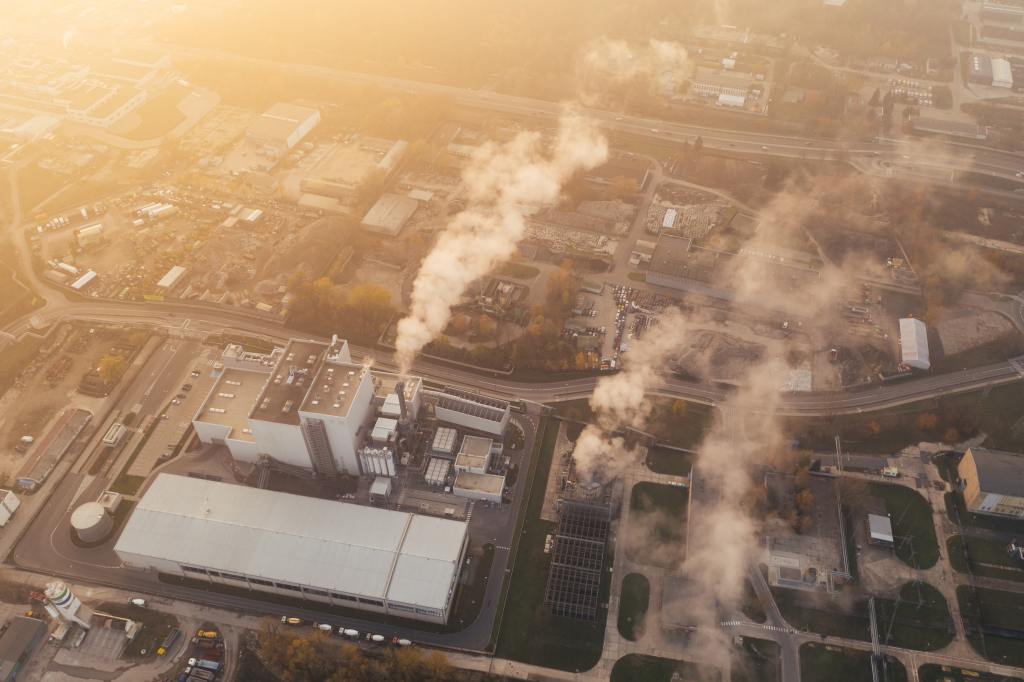
By now we should have a pretty comprehensive idea of where GHG emissions come from.
As a matter of fact, the lion share of emissions comes from energy generation.
And in fact, the policies that yield the highest results in terms of GHG reduction pass inevitably through the reduction of dependence on carbon-heavy fuels such as coal.
Another extremely important source of GHG is Agriculture in general. And that is something which should make us all rethink our model of development, considering the damage to the environment and the fact that a substantial part of the world population is still malnourished, while another substantial part is overweight.
There is though source of GHG which is worth looking into. Could be defined as “other” and as everything that can be defined as other, is way too big, diverse and misunderstood.
How much are these emission worth? According to our world in Data, which I used to compile this list of articles, quite a bit.
- Fugitive emissions from energy production: 5.8%These are emission form oil&gas and coal mining. It is important to note that these almost equal the emission from private transportation, hence addressing the topic would lead to immediate, tangible results, and at a very reasonable cost. Especially considering that technologies to limit these emissions exist already.
- Direct industrial processes: 5.2%. These refer mainly to Cement production and petrochemicals (3% and 2.2% of total respectively). These industrial process do indeed present an awful lot of negative externalities. Yet it is very difficult, at least in the near future (whatever the industry green washers say) to limit the impact of, say, cement production. There are however alternatives emerging, but tackling this kind of industrial emissions is a gargantuan task
- Waste: 3.2%. This are emissions which are basically the results of trash decomposing. Organic trash. Landfills and organic residuals in water gets converted into methane, which is a very potent GHG.
- Unallocated fuel combustion: 7.8%. These are a bit of everything: from combustion from heating, to the ghg emitted by cleaner sources such as nuclear (yes, although minimal, also nuclear has some ghg emissions) and pumped hydroelectric storage.
So what does this last batch of emission tell us? It tells us, as we have stressed along the first four chapter of this brief overview, that the world is a complicated place and that greenhouse gasses are a much more complicated matter than the eye can see (pun intended). In fact the most visually obvious polluters, such as aviation and transport, are actually responsible for a minimal part of the emissions. The lion share is, essentially, electricity and energy production.
Why is this important? Because it should be obvious that priority shall be given, in terms of action, to the big ticket items. Whereas the noise around climate change seems more akin to a moral crusade against specific habits rather than an holistic approach to tackle the problem as a whole.
And that’s unfortunate since it is really in the least “visual” part of the equation that the lion share of the problem really lies.
On top of that, any transition to a more sustainable economy, requires planning and consensus. Switching away from fossil fuels seems like an obvious target, however the support that an energy transition requires will dwindle really fast if the cost is to skyrocket or if the perception is, amongst the public, that the costs are not shared fairly amongst the population.
Hence it is important to have a whole picture of who pollutes, how much and why. So that even painful decision can be explained to the public (who also happens to be made up of voters and taxpayers…). This also to avoid populists and naysayers to exploit the noise and the confusion to push forward their power agenda, by preying on the lack of clarity and on the anxieties of the tax-paying public.








 Chainergy
Leave a comment