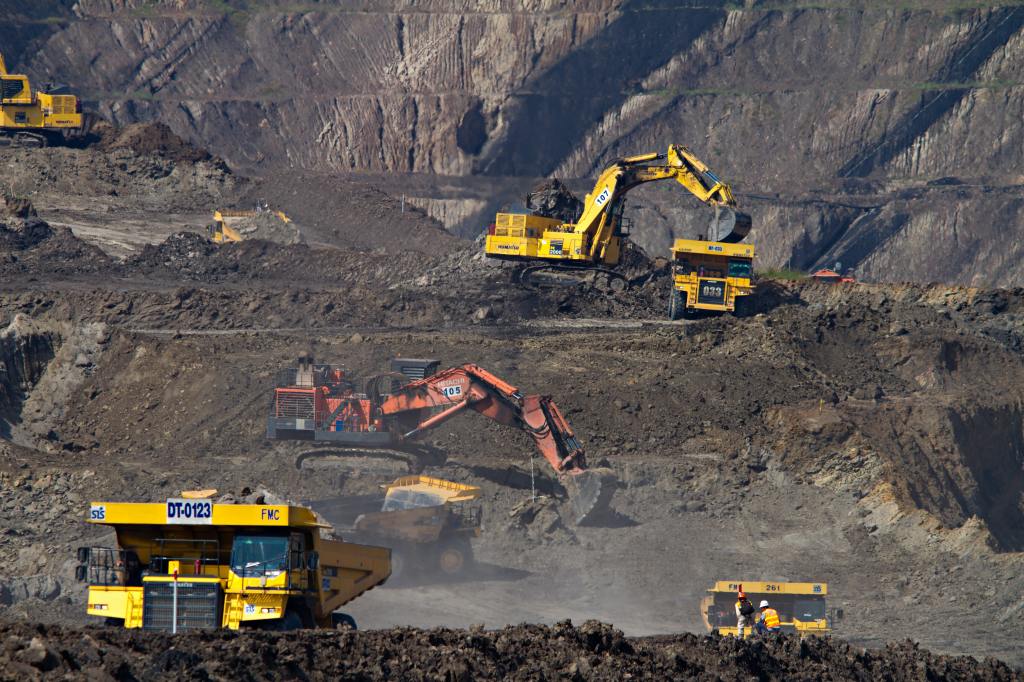
Coal has reached prices not seen since September 2008.
Is this a good or bad news? Well, judging from the overall market conditions, it can be read in a number of ways. The good news is that, thanks to the rebound in demand post-pandemic, China has seen its energy consumption soar.
The same applies to other advanced economies, like Germany.
The bad news is: it’s coal. It’s the dirtiest form of energy and the major contributor to climate change.
But, you might argue, the increase in price will spurn a search for substitutes, right?
Not so fast fellas: Coal is, literally, dirty cheap even at prices not seen since 2008.
How cheap? Here it gets trickier.
In the last few years, various ways of measuring the cost of electricity have been developed, most notably the Levelized Cost of Electricity, or LCOE. According to this metric, and depending on the assumptions used to project the costs, renewables are becoming more and more competitive, whereas Coal is rapidly losing appeal.
However, there is a caveat: depending on the assumption. Also the LCOE covers new installed capacity ie whether to build a new power plant using a technology versus another. What about the existing one? Here Coal fares better. And again, there is a wide variance by tweaking the assumptions of the new installed capacity.
However if we see the mere cost of generation in terms of dollars per MWh, coal is still, even at this record prices, dirty cheap (pun intended, meaning is cheap and also dirty).
This poses a serious treat to the efforts of governments to switch to less carbon intensive sources of generation.
So, green objectives and price hikes none the less, Coal is still the biggest source of generation.
Here it is interesting to look at why prices have shot up, as it gives a glimpse of why it is so difficult, slogans aside, to switch to cleaner form of energy.
Why have coal prices increased? Mostly because China and India, following the post-pandemic economic recovery, have seen their demand for electricity surge.
For China specifically, unforeseen weather conditions have kicked a substantial part of the hydropower generation offline. The issue is that, for covering baseload needs, other renewables are not very good. Hence utilities have switched back to Coal to cover the increasing demand. And hence Chinese buyers, who are also affected by an Australian export ban, are willing to secure supplies at the highest price. On top of this, Indonesia which is China biggest direct supplier, has been affected by consistent rainfalls which have hampered substantially its export abilities. (Ironic, in a way: China needs Coal because of a draught has hampered its hydropower sector and Indonesia cannot export because of excessive rainfall. Climate change at full circle here).
And what about other buyers? Europe and Japan have also participated in the race to coal, as consistently high natural gas prices have forced utilities to switch back to the black stuff.
As a matter of fact, even where renewable generation such as wind and solar is growing fast, it cannot keep up with the increases in demand, to the point that according to certain estimates it is only going to be able to cover half of the increasing demand, which is set to grow by 5% in 2021 and 3% in 2022 in respect to pre-pandemic levels.
It’s a complex world isn’t it? We want to switch transport to electric for environmental reasons, and yet we risk doing more harm than good because we need to generate electricity with coal.
So is the future of Coal oh-so-bright? No, for a number of reasons, both in the short and long term.
The weather conditions are likely to be temporary. China also tends to reduce substantially its demand after the August peak, and might as well decide to release some of its strategic reserves (or increase production domestically) in order to blunt the price hikes.
Another dampening effect are regulatory pressures in Europe: with Carbon prices soaring and a push for a faster switch to renewables, the scenario for the price of coal is unlikely to be bullish in the long term.
However it is unlikely to crash anytime soon: pressure on demand are, for the moment, not strong enough to make demand fall faster than the growth in supply, ensuring a certain level of price support in the near-to-medium term.








 Chainergy
Leave a comment