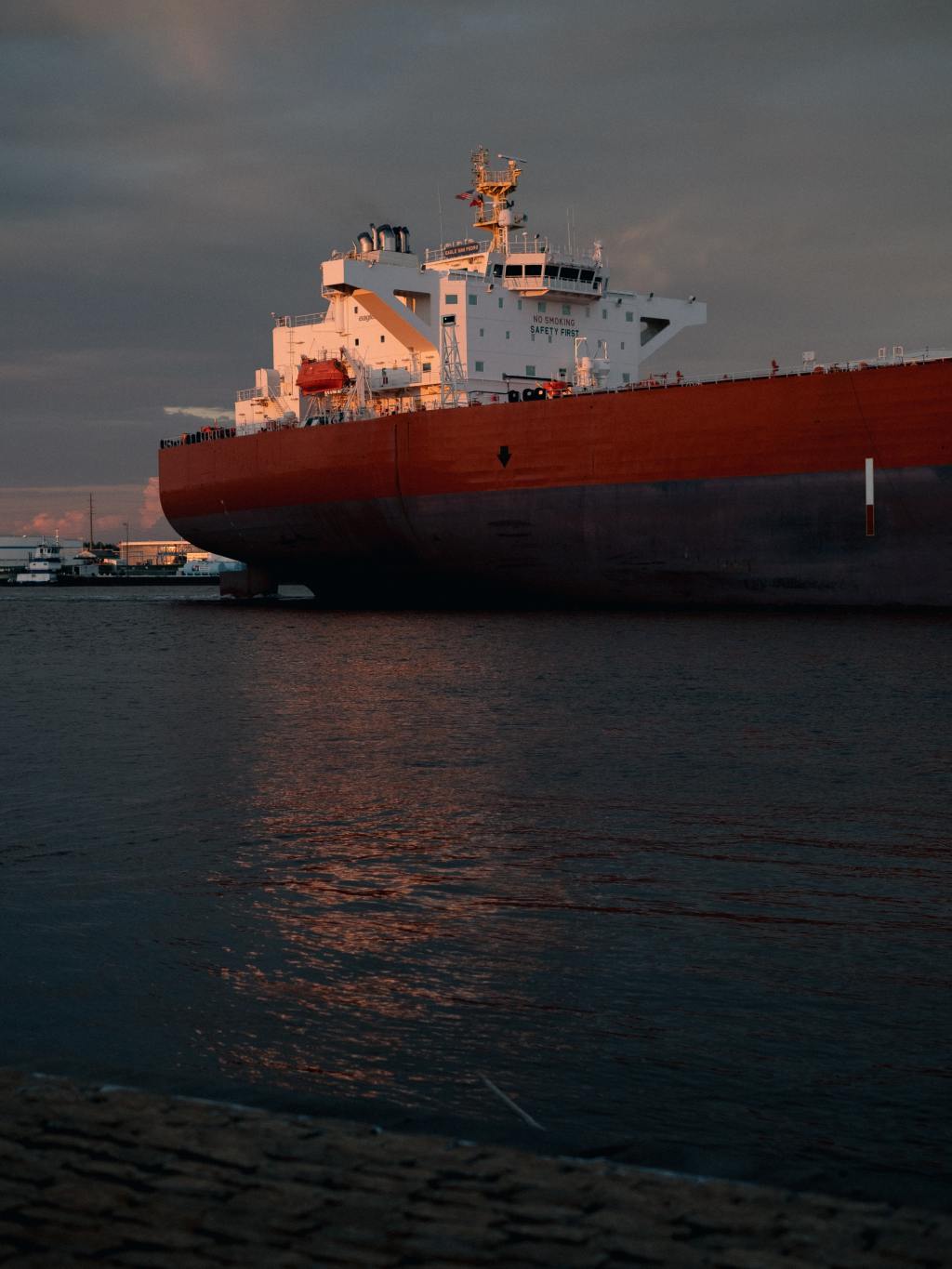
And now, for something completely different: The Brent Benchmark!¨
It has been in the news in the last few days that S&P Platt’s, the publisher of the Brent benchmark,(or as laymen call it, the price of oil) is thinking to add another crude to the calculation of the benchmark. And that this crude is not coming from the North Sea, as the crude that currently make up the calculation of the Brent benchmark.
Why is this news important? For a number of reasons, some more obvious and that touch everyone, some a bit less so. First, for you folks who are not excited about this kind of news (ie you are mentally sane or don’t work in the oil business, or both) what is the Brent benchmark? It is a pirce reference. Almost 2/3 of all the crude oil sold in the world is priced according to the brent benchmark. For example if I buy an Azeri light (which is, as the name suggest, a light crude coming from Azerbaijan, ie a high quality crude) I am going to pay a price which is going to be something like, 5 day average of the brent benchmark plus a certain premium. Because Azeri do it better, that’s why.(No, it’s because a light sweet crude is more expensive than an heavy sour because it is easier to refine. That’s it.).
So ok, the benchmark is important because it is a benchmark. And how it is that this is a benchmark for 2/3 of the world? Well because the fields that make up, until today, the benchmark are all run by market economies and they are close to the (so far) biggest financial centre in the world.
The “number itself” is kind of a weighted average of the crudes that come from the Brent, Forties, Oseberg,Ekofisk fields which are located between the UK and Norway.
The geographical area and the rule of law of the countries that oversee these fields has made it a natural choice to use these, as the transparency is the highest and, being traded in London, are naturally suited to become the basis for derivatives like futures and Swaps.
However all these fields present a problem. Thy are declining. Hence the quantities that are traded every day are getting lower and lower.
Which increases the risk of the benchmark being manipulated. There were already rumours, back in 2013, of manipulation of the benchmark (see https://www.scmp.com/business/commodities/article/1350214/crude-control). These rumours were not proven, however it is enough to undermine the perception of transparency to undermine the role of the benchmark. Plus if it can be manipulated (and lower quantities make it easier for a big player to manipulate, see https://www.researchgate.net/publication/262637387_Detecting_abnormalities_in_the_Brent_crude_oil_commodities_and_derivatives_pricing_complex )
And manipulation is paid by everyone who uses a car, in the end.
So what is Platt’s doing for this? The proposal is to include a WTI crude in the benchmak, ie a crude coming from the USA.
This is possible because since a few years, and after the production explosion thanks (or as many environmentalists think, for fault of) the shale revolution, the ban on the export of American crude was lifted.
Is this good news? it should be. However, it also present certain challenges.
As of today, about 1 million barrels of crude per day were traded from the “Brent” fields. 443 thousand barrel per day of WTI midland crude were exported last year to Europe. This means that about a third of the “new brent” (March 2022 most likely) will be US based. With the proportion potentially increasing.
On one side it is going, probably, to reduce the differential between the WTI index (the crude oil benchmark published in the US) and the Brent. But it will also mean that the perturbations that sometimes affect the WTI (like the infamous day in which the WTI turned negative) will be more likely to spread to the Brent priced world. With the result that volatility might increase.
Volatility is good for traders. But is bad for industrial players like refiners. And hence is bad for consumers.
It also means that certain trading opportunities, which are available when the fork between WTI and Brent is high, are going to disappear. And, considering the flows, the competition for market share is going to increase further, putting additional pressure on the prices, at least in the medium term.
In the long term is difficult to say which force is going to be stronger, the decline in production or the forecasted decline in demand because of climate change. I bet that first is going to be the decline in production driving prices high, and then the decline in demand will kick in.
Anyway, reading these news is a good reminder of why the oil industry is so interesting. It is truly global and quite complicated. So to conclude, I wish a great 2021 to all the folks that keep our world running. There is life to be had, even in the pandemic.





 Chainergy
Leave a comment