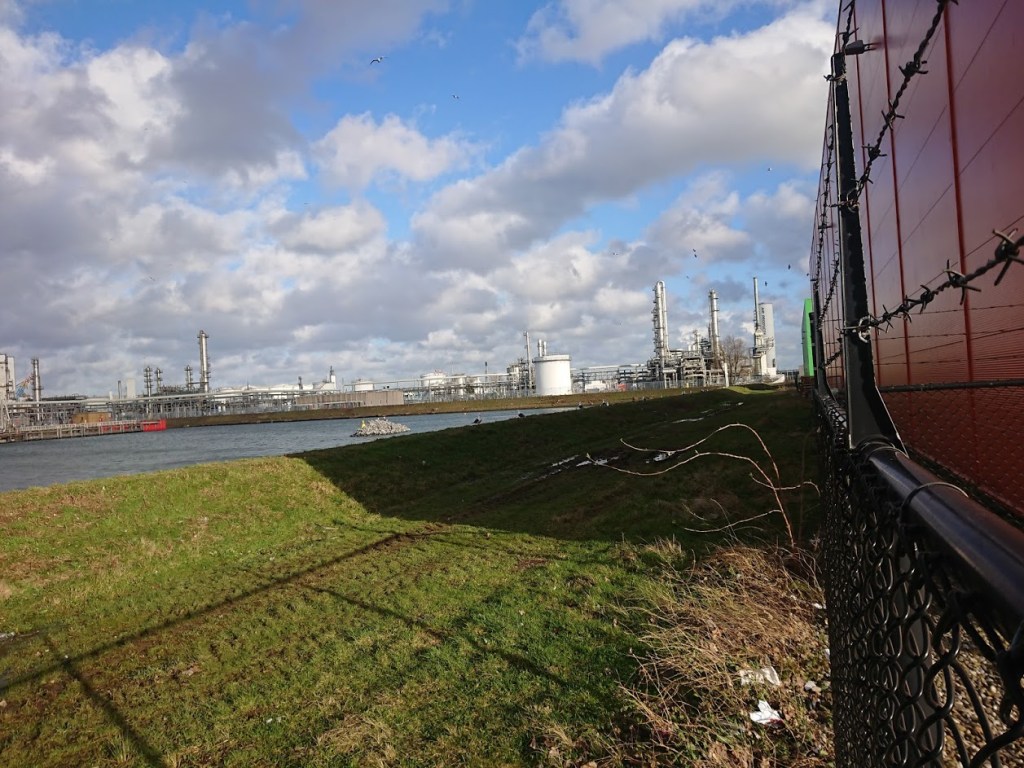
There seems to be a boom in the production, and consumption, of petrochemicals around the world.
Why? Because, countering a trend that has been pretty costant almost in the last 20 years, oil majors are rediscovering the petrochemical sector.
The reason is easily (kind of) explained.
Until the 90s everything that was downstream activity, from the production of transport fuels to the production of chemicals (the stuff that you make essentially plastic of) was seen as a low-margin/low growth business.
Especially in Western Europe a mix of environmental regulations, falling demand and increased fuel efficiency, coupled with the boom of oil prices, had shifted the attention of oil majors to the more lucrative upstream part of the business (the one where you essentially dig a hole in the ground and pump oil out of).
On top of that, growth in consumption was entirely shifting in emerging economies in Asia, and State owned oil companies such as Saudi Aramco were keen on capturing a higher portion of the value added in the oil industry, hence they had invested substantially in developing their own refining/petrochemical processing capacity.
Eni, the company where I worked between 2006 and 2012 had for example spun off its petrochemical activities in a different company (Polimeri Europa/Versalis) For a good part of the last 2 decades, petrochemical and refining assets were seen as a bit of a dead end.
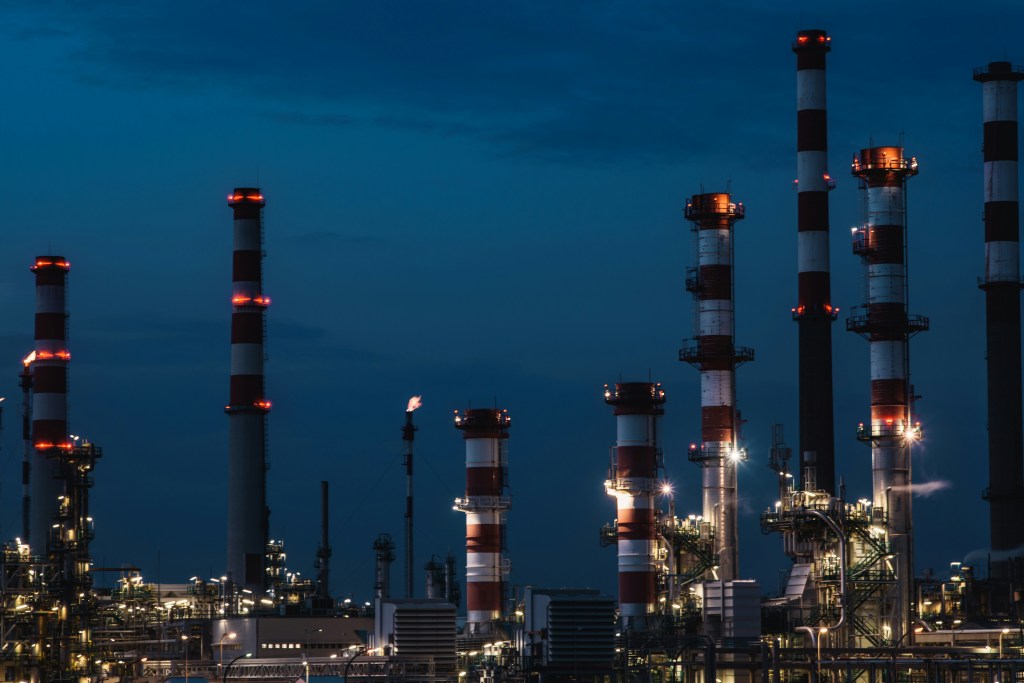
Now all of this is changing. Why? First we need to understand the basic chemistry of petrochemical production. In essence, at the core of the chemical plants there are Crackers, ie miles of pipes and furnaces that break down ethane a gas, into ethylene(it is actually a bit more complicated than that, but please pardon a bit of simplification). Ethane can be either extracted from Natural gas or can be obtained as a byproduct of crude oil refining. This is an important point: given the prevailing economics of the gas market versus the oil markets, it can be at times more convenient, and hence more competitive, to obtain ethane from gas or from liquids (it has to be noted though that ethane is an almost inevitable byproduct of oil refining, which explains why historically petrochemicals plants are located adjacently to oil refineries).
The thing is, that a bit because of the fracking revolution, a bit thanks to the improvement of drilling techniques and for the discovery of a few gigantic gas fields, in the last 2 decades the economic balance has tilted towards the gas based process. However in the last 2 years or so, thanks to the crash in crude prices, all of a sudden the liquid-based crackers are also getting more competitive. This is not good news for oil companies, and for the environment.
The fact that is not good news for the environment is pretty obvious: a very cheap ethylene means a very cheap plastic, which in turns means that in order to make money there is only one way for oil companies: increase volumes as much as possible.(gas is plentiful and refineries run anyway, so volumes contribute, albeit with a low unit margin to the economics of the plants). Which in turns means that the search for an alternative to plastic takes a back seat. And that’s, quite obviously, bad for the environment: our ocean are already being chocked to death by plastics.
However this is also bad news for the oil companies: in the last few years many of the major, and some of the State Oil enterprises, have brought online or have invested heavily in petrochemical capacity.
With Exxon speding north of $20 billions in refining and petrochemical capacity adjacent to the Permian basin, Shell adding substantial capacity in the same area, and Aramco, SABIC(also from KSA), ADNOC all adding massively, it is not difficult to forecast a massive glut of overcapacity in the coming years.
It has to be noted that according to the International Energy Agency petrochemicals will account for roughly a half of the growth in oil demand between now and 2025. However the increase in supply is massively outstripping the increase in demand.
And then there is the elephant in the room: oil prices. If oil prices would start to rise substantially, a lot of additional capacity might simply become uneconomic.
No one seems to believe now that oil prices might rise again. However people seem to forget previous cycles of the business, which invariably go: price crash, investment in exploration gets slashed, demand rises due to economic recovery, prices spike. And I do not see why this time it should be that different: especially considering that exploration budgets are at their lowest of the last 20 years, and they will not recover any time soon. And if you think that frackers in the US might pick up the slack, you might be in for a shock: fracking wells have a much faster depletion, and most fracking company are over-indebted and might not survive the current crisis.
So, you might ask your point is?
Well, my point is pretty simple. Actually it’s not one point: it’s 2.
- The current rise in plastic consumption and production is unsustainable, seems to be that governments should pay more attention to this phenomena. We are considering carbon pricing and CO2 reduction. What about plastic pollution? Wouldn’t it make sense to consider a emission trading scheme similar to the one for CO2, or some form of taxation to make sure that negative externalities (ie environmental damage…) are properly priced?
- Oil companies: it is true that a glut is more likely to result in reduced profitability rather than a stranded asset, and that at the current, extremely low, cost of capital it seems still pretty logical to add capacity. But how long are this conditions going to last? How could an adverse effect be edged?
This are complex questions that do not have a clear answer. As for me, I still hope that technical advancement might send plastic the way of the steam engine.





 Chainergy
Leave a comment