You should not. And I might end the article here, but then it would not be an article. A tweet maybe.
What you should do if you want to invest in commodities.
I am writing this short piece because I have been in contact with a few friends and colleagues who were asking whether they should invest in commodities.
I understand where they are coming from. Returns on most asset classes are, to put it mildly, shit. However the risks are still there. Investing in real estate post covid seems like a long shot, plus it’s illiquid. Bonds? Are you kidding? You need to invest a truckload of money to earn the equivalent of a carton of milk.
Shares? Well, that also looks like a fairly bumpy ride. Loads of indicator point towards a bubble, so it’s not a matter of if it will pop, it’s a matter of when, and how bad is it going to be?
So how about commodities? Sure those are liquid and can provide a sound return, right? Big commodity traders are thriving with high volatility…
So, really what should you do if you want to invest in commodities?
I will sum it up with 2 general advice
- Don’t.
- If you really want, think again, and see number 1.
Bit of blunt advice, isn’t it? Well, yes, it is. And for good reason. Now first thing first: I am not writing this with a big investor in mind. I am writing from the point of view of the saver who wants to accumulate a bit of capital in his pension or diversify his investment income. Someone with less than say, 500 thousand dollars of assets to take care of.
So first a general rule: in nature, as in finance, the big fish usually eats the smaller fish. And in commodities you are not going to be the big fish.
But this is too general, you might say.
True, hence here is a brief recap on how you could invest in commodities, and why you shouldn’t.
I assume you all know what commodities are(are bulk goods and raw materials, such as grains, metals, livestock, oil, cotton, coffee, sugar, and cocoa. The term also describes financial products, such as exchange traded future contracts which can entail a physical or a cash settlement.)
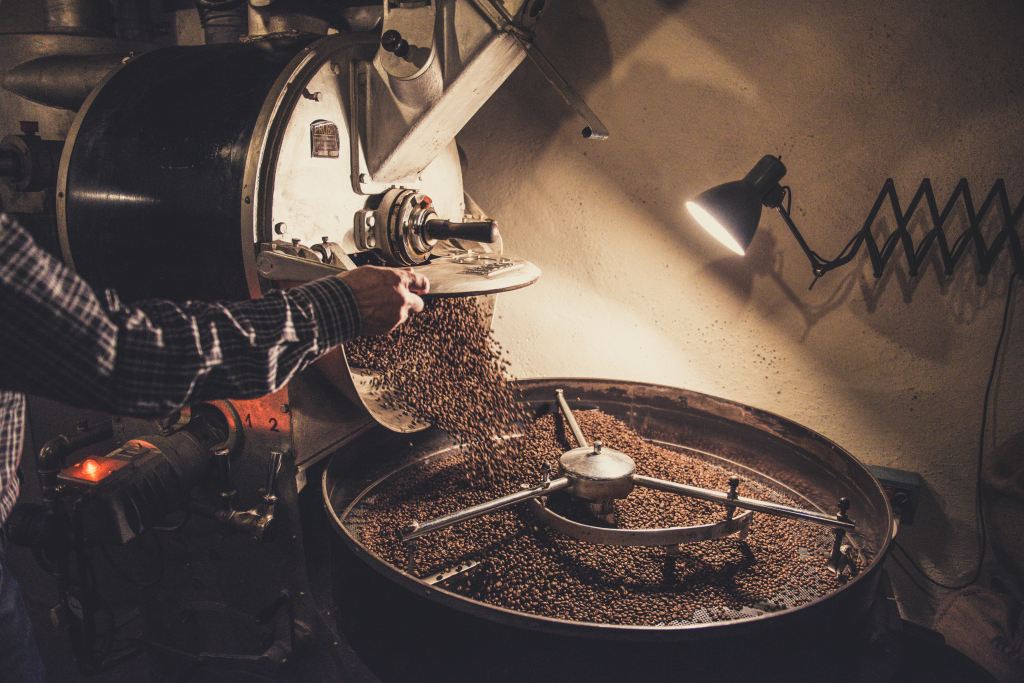
Commodities, as an asset class, is very wide, and can contain a bit of everything. On top of this there is different ways to invest, with different tools and different level of involvement in the physical commodity itself. At the end of the day buying a container full of Coffee green beans ,as I did for a while, playing with futures or investing in an ETF are all considered “investing in commodities” yet they are as similar as riding your bicycle down the shops or taking an intercontinental flight. They are both “transport”, and in both cases you go from A to B. And in both cases, you can crash and it’s going to suck, but the similarities end there.
The same way, buying a physical commodity to resell and playing on an ETF present the risk of losing a substantial amount of money, yet the technical complexities are very different (to buy futures you need an account and cash to post a collateral, to buy a physical commodity you need to buy, ship it, store it and resell it).
So let’s do a brief recap of what I personally consider investing in commodities. You might disagree, and that’s fine. The view expressed here are my own opinions, and do not constitute neither investment advice nor science, so if you don’t agree or don’t like it, feel free to comment. I will happily ignore your comments anyway.
So what are we covering here:
Physicals
Investing directly in a physical commodity: yes, the kind of scenario where you physically buy the stuff and try to resell it. It’s a fascinating world, but it’s way too complex for an “investor”. The risk of losing your shirt is high, the returns are low and unless your surname is “Trafigura” you are going to be the proverbial small fish in a sea of sharks. Small fish can survive, but it’s not much fun. I can already hear “but..but… Gold!!” yes right, gold. And precious metals. I never understood what’s so special about gold. It can somehow store value, but it can also be quite volatile. And the problem is always the same: overall it matters when you buy and when you sell, not just the overall trend in the market. You can still lose your shirt with gold, and over the long period gold has underperformed the stock market, without delivering a materially lower volatility.
Futures
Investing in futures: I have done also that, connected with my failed coffee venture. I even made money on it. Actually it was the only part of the venture on which I made some money. But yet, you still shouldn’t do it. Compared with the physical side of the commodity business, is somewhat easier: you need some cash, a broker account, an understanding at least basic of the contract you are trading. That’s it. You can invest in a lot of different futures, from oil (Brent, WTI, Gasoline in various reasons, diesel, JET A1…) to soft commodities (they are called soft because they are…well soft. Agricultural goods such as Coffee, grains, cocoa etc) or metals (non ferrous mostly, as ferrous are a bit different: Copper, tin, Palladium you name it).
So the point is to “go long” if you think the price will go up and “go short” if you think the price will go down. This at least with plain simple futures. You can also deal in options where you can place a call and a put.
So why you should not invest in futures? Because you need a lot of cash. I will take the case of coffee: the basic future is 37500 pounds, or 17 tons. Even at the depressed price we had in the last few months we are talking about 40 thousands Dollars, give or take. Not exactly pocket change, at least for me. And even when the price seems so low that it can only go up (when for example, the price is lower than the cost of production) it can still go lower. So you can still lose money. Why? Because the markets might be rational in the long term, but I the short term they can do a lot of crazy stuff. Take oil: does it make any sense to have negative price? No, not in the long run. But the long run might be a lot longer than your ability to take losses.
Other commodities are even worse, for example Palladium, one of my darling, will set you back easily to the tune of 100 thousand USD per contract. That’s again not the kind of cash I find behind the cushion of my sofa. Which also means you are limited in the kind of positions you can take.
I can already hearing “Eh, but I don’t need to use all the cash for buying future, I can leverage and make a lot more”. For god’s sake, do not leverage. Why? Because leverage works both ways. You can earn a lot more but also lose a lot more. “Eh but I have my stop loss”. You might want to sit down a second on this: Stop-loss trigger do not always work. And if they do not work, you are still on the hook for whatever loss you have accumulated. In a high volatility, or if the market for whatever reason dries up, your stop-loss will not work. Think about the absurd case of the negative oil price: market were most likely illiquid. Which means you had no way to…well stop your losses.
“So I really should not invest in commodity futures?”. No, you should not. For the same reasons you should not bet on horses: you can win, but most likely you will lose.
If you enjoy betting, feel free: but that’s what you are doing. Betting.
“Ah but then why commodity houses play on futures? And make money?”
Because commodity house go on the market to hedge a price risk where they have a physical exposure most of the times. And they know the market better. And they are bigger than you.
Now, to be fair, there were studies in the past that pointed out that commodity futures have outperformed the S&P500 . In Facts and Fantasies About Commodity Futures (NBER Working Paper No. 10595),Gary Gorton and Geert Rouwenhorst show “that over a 45-year period a diversified investment in collateralized commodity futures has earned historical returns that are comparable to stocks. That reward, rather than foreseeable trends in commodity prices, is the key to the returns that a futures investor can expect. Individual commodities can be very volatile, but much of this volatility can be avoided by investing in a diversified index of commodities”. True, over a 45 years period and using a diversified index of commodities. 45 years is a very long time, and a diversified index means you need to have the financial firepower to invest in a diversified index. I suggest everyone to read this paper, is a bit dated, but it makes for an extremely interesting read. But you still should think twice before investing in futures.to summarize, over this period it has exceeded T-bills, which are almost risk free.And it has comparable return to stocks “by rolling positions on the London Mercantile exchange”. Which is quite unrealistic for a retail investor.
Hence you are warned: investing in futures is not easy nor risk free, and not a good idea for a retail investor.
ETFs
ETFs are Electronically traded funds. The most common track a basket of securities, say the S&P500, FTSE 100, US government bonds and the like. They are an easy, relative low cost way to invest. And yes! You can invest in indexes that track commodities. There are a number of ETFs, some more liquids than other (depending on how liquid the underlying commodity is: Oil is more liquid than say, Cotton). Are they a bad idea? Depends. They can be a better idea than going directly into futures and options, but they are still a very risky proposition.
Why? Because commodities can be very volatile. And they can be quite expensive.
For example, if we look at Bloomberg L&G Longer Dated All Commodities UCITS ETT (3 Month Forward index tracks the price of futures contracts on commodities, representing the following commodity sectors: energy, precious metals, industrial metals, livestock and agriculture), it has a Total expense ratio of 0.3% (that’s the cost of holding the fund) and its performance has been not exactly stellar. Better than the market, but losing money none the less. It’s 3 years performance as of the date I am writing has been -9.8%. With quite some volatility along the curve.(source: https://www.justetf.com/ch-en/etf-profile.html?assetClass=class-commodities&cf=Broad%2Bmarket&groupField=index&from=search&isin=IE00B4WPHX27#chart visited on June 22, 2020).
On top of this you might want to consider your currency risk, that given the volatility of FX, can turn a good investment into a bad one. And certain commodities, which are priced for example in GBP, might be more susceptible to currency swings than others.
The issue is always the same for a retail investors: the potential upsides are there, but the downside can be much bigger.
And just looking at a snapshot of the biggest commodities ETF, their losses can go from -9% to -25%, with Total Expense Rations going up to 0.6%. Not pocket change, if you ask me.
Investing in commodity stocks.
Another, and probably the simplest way to “gain exposure” to the commodity markets is to buy shares in mining or commodity trading companies.
This by itself would require a book, but my view on this matter is the following: A lot of successful commodity houses are not publicly traded (Think Trafigura).
Being “exposed” to an asset class via buying shares in a company of the sector will expose you to both the risks connected to the stock market AND to the risk of the underlying commodity, the interaction of which are fairly difficult to predict. On top of that, a badly managed company might underperform a successful sector none the less.
And you have to be careful by how you define a sector. A miner and a trader are very different beasts: a miner is mostly affected by the trends in prices of the commodities it extracts (a copper mining company will benefit from a higher price of copper and will suffer from lower prices) whereas a trader cares less about the overall trend in prices but CAN be positively affected by volatility. In general terms if you think there is going to be a high level of volatility in, say, copper or oil, Glencore might be a better bet than say, a pure mining player. But that does not mean that the positive effect of the volatility might not be overshadowed by shocks to the wider stock market.
A last consideration: ethics.
Investing in commodities might not be for everyone on also on ethical consideration.
If you are concerned about the environment, and you want to put your wallet where your mouth is, then commodity companies might be a tad problematic.
Think for example about the effect that growing soybeans has on the deforestation in South America. Or about the environmental pitfalls of oil drilling. Or to put plain and simple: Commodity is mostly a volume business. Companies, to make money, need to increase their volumes. More volumes mean more consumption. More consumption means more pollution.
I am not going to express here my position on the matter. But as a matter of fact, this is a sector that has substantial negative externalities. It is also the sectors that allows us to live our 21sr century lives. So I leave up to the reader to make up his mind on ethical consideration, but it would be disingenuous to ignore this fact.
To conclude, what should you do?
At this point in time I do not invest in commodities, for a mix of the reasons stated above.
It is a very risky proposition and, especially in this historical period, it is akin to gambling. Gambling is not illegal, but I am viscerally against gambling, out of education mostly but also out of the consideration that the little saving I have did not grow on a tree.
But at the end of the day I am just another guy on the internet with an opinion, it’s your money after all.
If you want to invest in commodities, be sure to invest only money you can afford to lose.
And DO NOT trust your stop losses too much. And, if you ask me, do not leverage. You are warned.





 Chainergy
Leave a comment