….Or is this even a question to ask? Welcome to commodity lunches, a space where I am going to host people who are innovating in the commodity space. Today we have the first of a series of articles that where we will meet the real people who are working to advance trade: through technological development, innovation or by looking at new ways of doing things.
This time around we leave the big players aside and we will talk about a start-up. One of the many that are doing an amazing work at advancing trade.
Most of the projects under the spotlight involving Digitalization in the commodity space involve some big names and revolve around hyperledger (block-chain) technologies.
I had the chance, through the meeting I will walk you through today, to look at this topic from a slightly different angle.
In this specific case we talk about the buzzword of the day: digitalization.
I had the pleasure to meet the founder of CommoChain shortly before Christmas in Geneva: Mr.Ludwig Clément (you can reach him here https://www.linkedin.com/in/ludwigclement/) is the founder of CommoChain, a startup active in the digitalization space in Geneva.
Commochain has already gone past the proof of concept phase and has started to sell its solutions onto the market.
Ludwig was kind to accept my invitation over lunch to share his view on what is going on in the market in terms of evolution in the IT space and what is his vision for his company and for the sector in general going forward.
It has been an interesting exchange since we actually come from almost opposite areas of the commodity industry, me from large players in oil&gas, Ludwig more from soft commodities in areas, such as Cotton and Coffee, where size is on average smaller (of players, cargoes, infrastructure…) and fragmentation of players is much higher. An area where Geneva has an historical presence dating even longer than oil and metals.
Anyway the difference in background has made for an eye-opening exchange since there is less visibility on the start-up scene trying to bring digitalization into commodity trading, whereas the big consortia between banks and major trading houses (especially in oil or for the “big4” agricultural traders) have a constant presence in the news.
From my point of view, coming from an oil-major background, I also find myself as biased towards what Ludwig aptly calls a “top-down” approach, where a bunch of big players enter the market with substantial financial and expertise on the table to achieve a common goal.
I was essentially pretty skeptical about the possibility for a small start-up to break into this kind of market, which seems dominated by the big banks mostly, and mostly to solve issues that cater to the kind of big players like Trafigura or Mercuria.
Ludwig has offered me a fresh perspective though, as we were discussing what he is trying to do and what is his vision for the development of the market. His vision is essentially to bring digitalization in the commodity trading and, as a matter of fact, he believes this can be done through different technologies. I second his view that which technology is used is irrelevant for the end user.
His company had in fact started with smart contracts (a block-chain based solution) but then pivoted to a different technology. His approach is to tackle a problem he is aware of from his days as a trader and as an CTRM consultant and then eventually extend the solution to other parts of the business, as the room for efficiency and ultimately more transparency and a more seamless trade is pretty wide.
It is interesting to know that Commochain had started to develop smart-contracts however it then pivoted to a different solution as, for the specific issue it was trying to solve, that did not seem as the best tool for the job. And here we have a vital take-home lesson for any start-up, simple yet powerful: find a problem to solve, rather than develop a solution waiting for a problem. Especially if you are starting small.
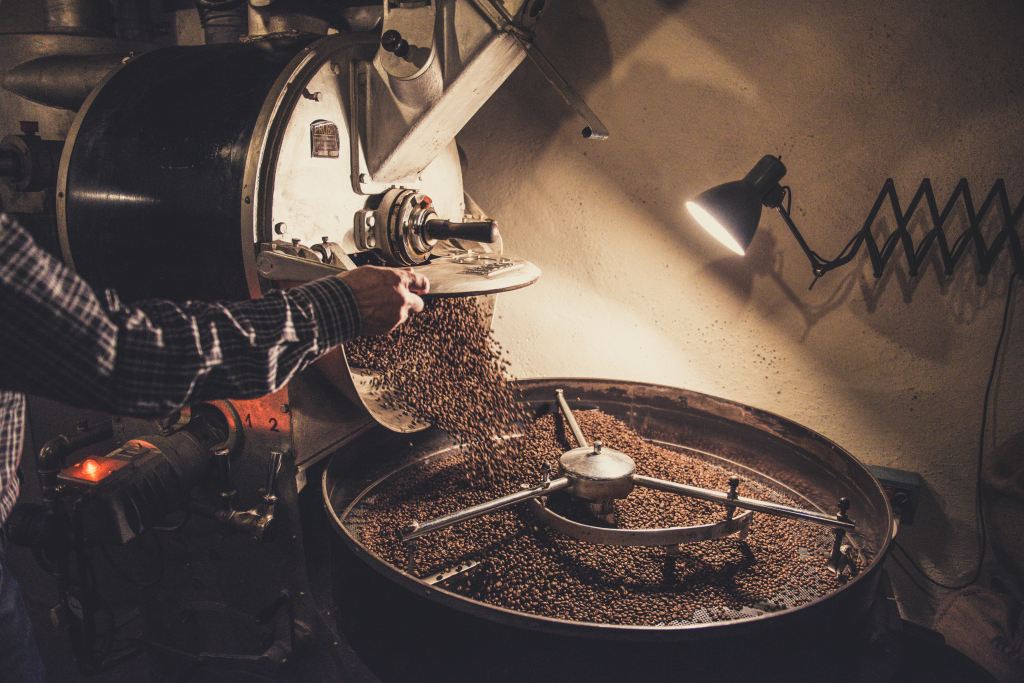
So the first solution that his company is offering is a productivity suite to tackle the tracking of coffee samples: at any given time, hundreds, if not thousands of sample go back and forth between producers, roasters and traders. And at the moment there is essentially very little awareness of the complexity and the consequences on operations and customer experience, amount of paper documentation connected to the management of this topic in terms of acceptance, quality, traceability.
It is clear that this specific issue is not only typical of coffee: any commodity consumer will have the issue of managing and tracking the various samples. Even my last employer, a fashion company, would be only too happy to have a system to properly track its raw materials and ensuring an efficient process of quality assurance.
So I do see a lot of potential, and merit, in this solution. And ultimately, the management of documents is what is necessary to ensure a seamless execution of the trading activity, especially in terms of supply chain. And whereas the big initiatives like Komgo or Vakt are geared towards “the big guys” there is indeed a lot of space in the market that Ludwig and his team are trying to cover. The real issue here is more cultural, as commodity folks tend to be a very conservative bunch. But as new executives are coming of age, I do not see why the industry shall stay in the 20th century.
Another interesting part of the vision that Ludwig and I discussed is the “side effects” of digitalization. Whereas I see immediate benefits in terms of fraud prevention and economic efficiencies (I am a finance person after all) and I am more concentrated in the possible benefits in the 3/5 years time frame, Ludwig believes that by bringing more players on a digitalized platform and making gains in terms of transparency and traceability might turn commodities in a completely different asset class: essentially it could allow, through tokenization or by different means, investors to finance commodity transactions directly, bypassing the traditional trade financing facilities and allow for “sustainable investing” by giving the ability to track the transaction from A to Z, and removing a huge barrier to entry, scale, for individual investors to finance transactions in this space.
There is a lot to say about the newer generation of investors (millennials…) being willing and able to go the extra length to ensure ethical and sustainable investing. From my point of view, coming from oil, I am a bit unconvinced by the idea that sustainability is a real competitive advantage when it comes to attract investors: at the end of the day, for all the talk, what matters is returns. If this asset class will be able to offer attractive returns and a reasonable risk profile, then for sure sustainability is a good point. Otherwise is going to be a tough sell. However to Ludwig’s credit it is becoming more and more difficult for example to find financing for hydrocarbon related projects because fund managers are wary of being seen as enabling pollution (whether this is rational is a different set of problems….) so actually there merits in his view.
Overall it has been an extremely interesting conversation and I want to thank Ludwig and the CommoChain team for the work they are doing and I am sure they will achieve great things.
Please feel free to explore Commochain website at http://commochain.io
As for me, the plan is to host more of the people that are doing something to advance global trade through innovation. I will be hosting these discussion on my new website, Chainergy.net so stay tuned for more updates.
In case anyone once to discuss this topic in details, please feel free to reach me via the contact form or linkedin.





 Chainergy
Leave a comment